Kanzlei21
Selected work
This page brings together selected work across product, data & AI, and architecture & space. The projects shown here illustrate different types of work, spanning early problem framing, cross-disciplinary collaboration, and work close to real-world constraints. My specific contributions to each project are detailed in the project descriptions.
Product
Felini
Privacy-first AI chat app
Year: 2025
Client: German tech NGO
Team: RubidiumData
Role: Product Design / Management
Status: MVP released
Platform: Web app · Mobile app
Description
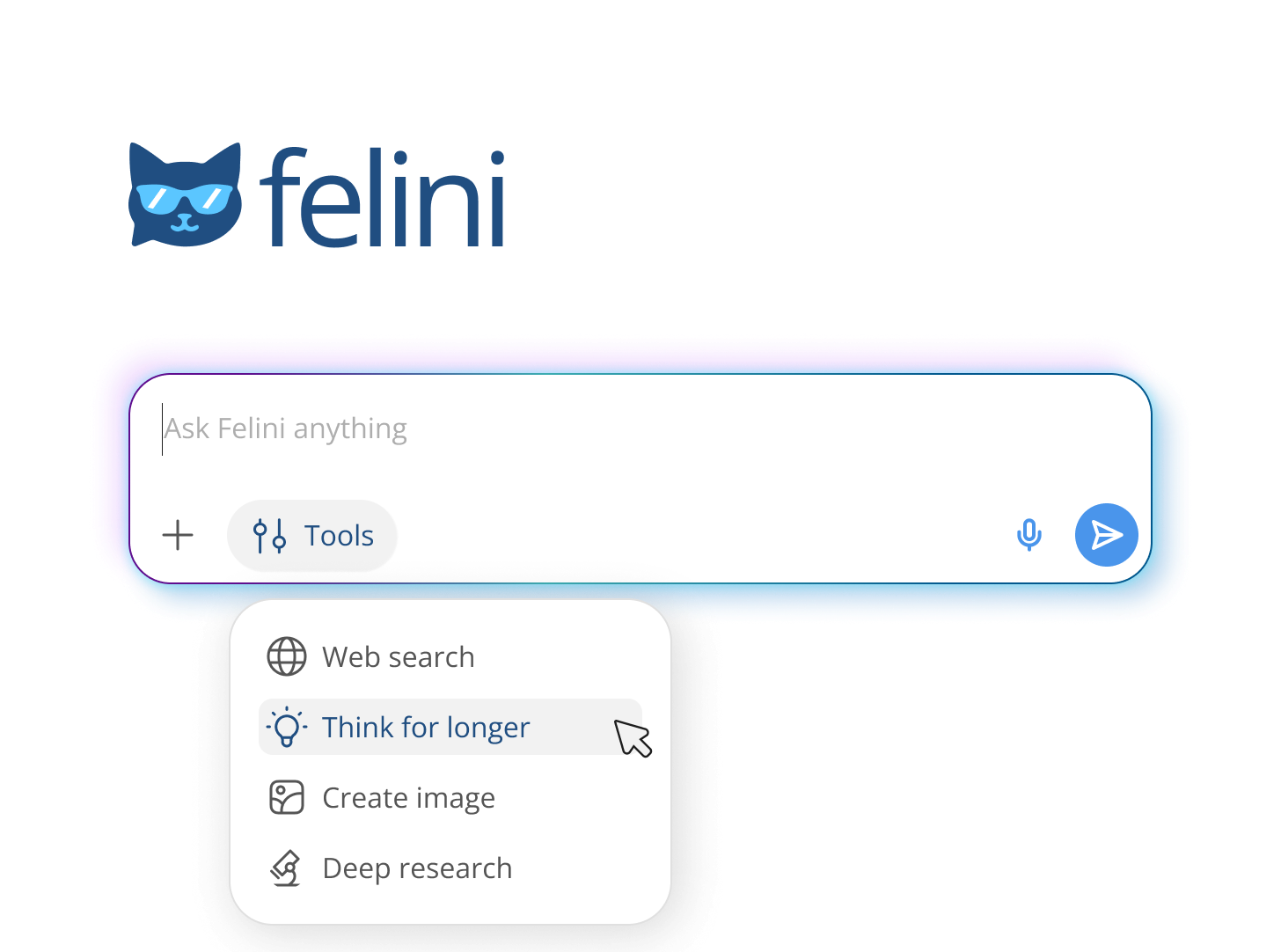
A privacy-first AI chat application built from the ground up for a German tech NGO, designed around established chat interaction conventions while developing a clean, minimal interface with a distinct character.
+25%
Signup conversion
Landing → account
5 → 2
Onboarding steps
Reduced from 5 to 2 steps to first successful interaction
~40%
Drop-off reduction
From landing page during early user flow
Contributed to product vision, roadmap discussions, and feature prioritization. Helped frame user validation goals to test assumptions around privacy positioning, brand perception, and UI simplicity before scaling.
Designed the core user experience of a web-based AI chat app, covering key flows from landing page → signup → chat → logged-in usage. Identified usability gaps and aligned features with user expectations shaped by existing AI chat products. Built clickable prototypes to support early validation and development alignment.
Introduced a hybrid design–development workflow by creating a dedicated design branch in GitHub and using Cursor AI to implement UI-level design changes directly in code, reducing design–dev friction and enabling faster, outcome-oriented iteration.
Helped shape brand positioning and public product messaging, with a focus on privacy, non-profit values, and independence from Big Tech. Refined landing page copy and value propositions to communicate clearly without feature overload.
Worked closely with stakeholders and board feedback, translating strategic input into concrete product, UX, and research decisions, and aligning mission-driven goals with practical product outcomes.
Product & Design
Product thinking & prioritization UX & interaction design Problem framing & assumption definition
Technical
AI product literacy Design–development translation Code-aware design workflows
Collaboration
Cross-functional collaboration Stakeholder & board communication
Establishing trust and clarity within a familiar chat paradigm — without compromising privacy or product identity.
Kanzlei21
Tax automation platform for accountants
Visit website Year: 2024–present
Client: Kanzlei21
Team: RubidiumData
Role: Product Design / Management
Status: Beta release
Platform: Web app · Mobile app
Description
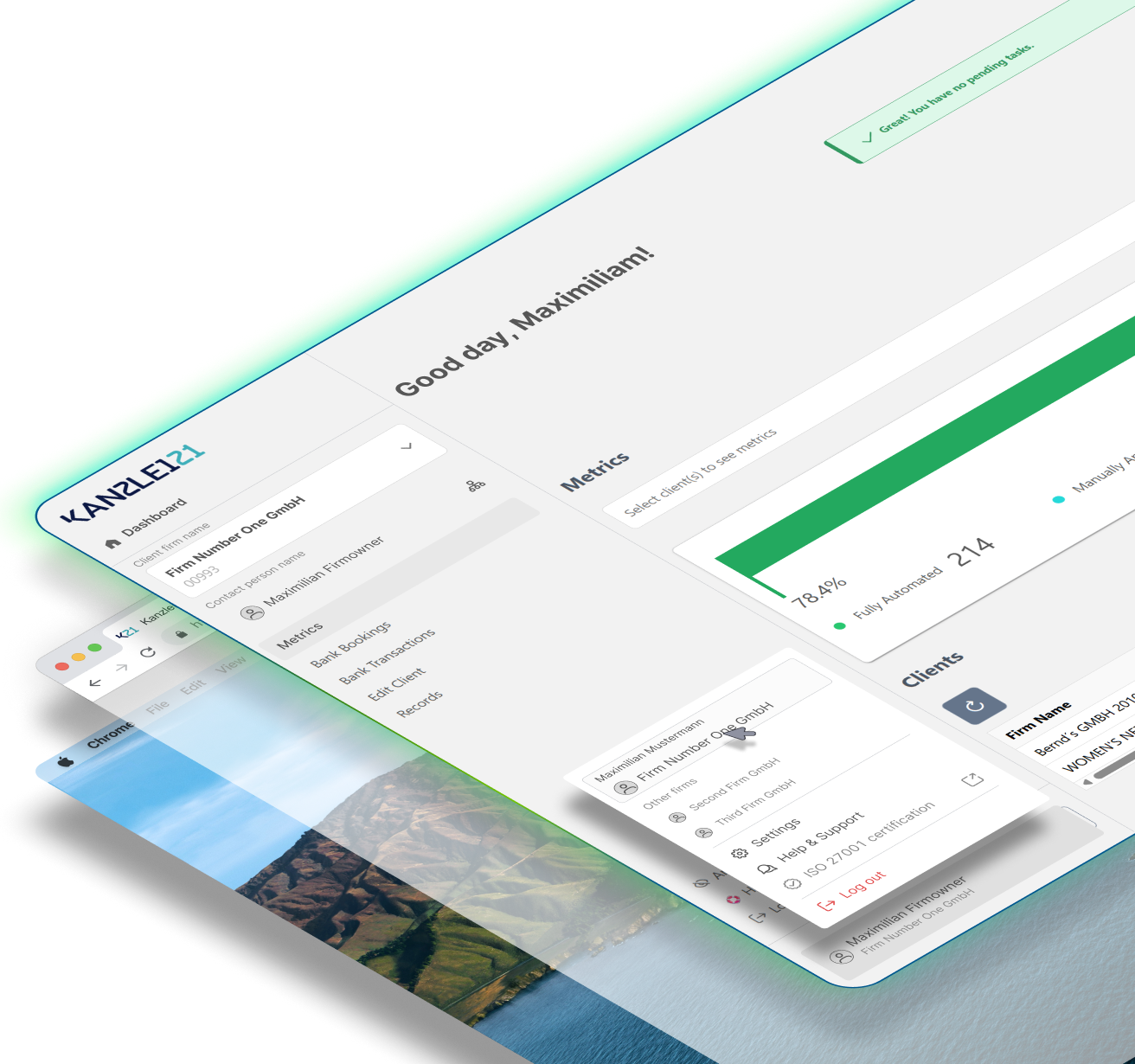
A tax automation platform for accounting firms, designed to support regulated financial workflows, complex data exports, and professional client processes, while maintaining clarity, reliability, and trust in daily use.
~85%
Workflow automation
Across core tax processes
~93%
Processing accuracy
In automated document and data handling
~60-80%
Time reduction
Compared to repetitive manual workflows
Designed and refined support workflows, including ticket structures, automated responses, priority levels, and SLAs, aligned with professional standards in accounting and tax advisory contexts.
Managed direct communication with accounting firms, drafting, translating, and refining professional client communication in German and English, and explaining technical system states in a clear, domain-appropriate way.
Analyzed real accounting exports (ZIP, CSV, GDPdU), documented exact file and folder structures, validated formats, and translated regulatory and domain-specific requirements into developer-ready documentation.
Supported bank account integrations via FinAPI, verified successful connections, and analyzed transaction metadata to assess data consistency, completeness, and reliability.
Created a dedicated design branch in GitHub and used Cursor AI to implement design adjustments directly in code, enabling faster, outcome-oriented collaboration with developers.
Diagnosed and resolved issues in local development environments (Docker, Dev Containers, WSL), validating services and bridging gaps between development tooling and product usage.
Product & Process
Product thinking in regulated domains Support workflow & SLA design Problem framing & structured analysis
Technical
Accounting data analysis (DATEV / GDPdU / CSV) Bank integrations & transaction analysis Design–development translation
Collaboration
Client communication (German & English) Cross-functional collaboration
Designing a reliable and intuitive automation platform within the highly regulated German taxation ecosystem — where correctness, clarity, and trust outweigh speed or novelty.
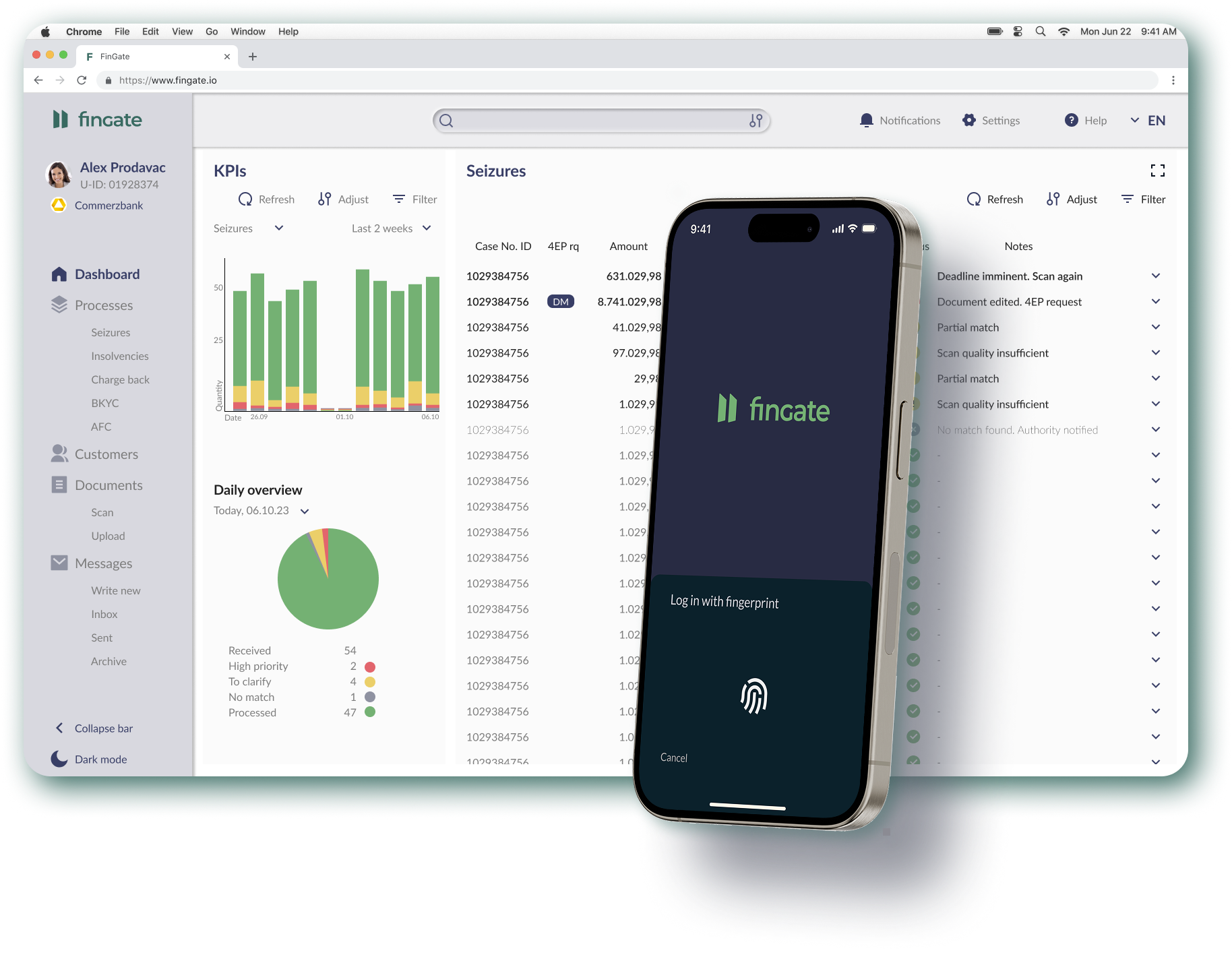
Fingate is a B2B SaaS platform for automating banking back-office processes. Focused on regulated German banking workflows, the product explores automation-first approaches to reduce manual effort and human error in legacy-heavy environments.
View case study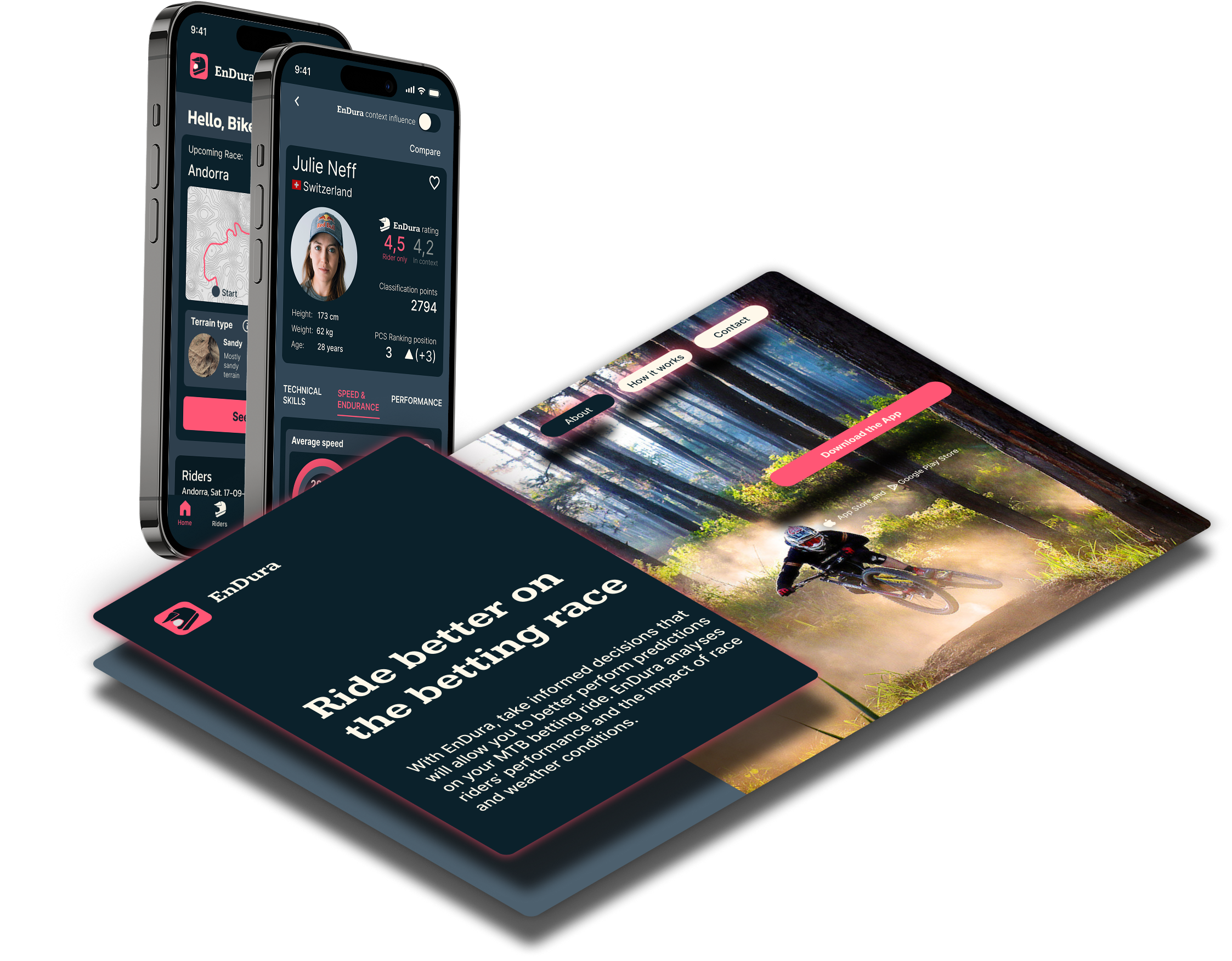
An app designed to turn complex sports data into clear, usable insights. The MVP explores how rider, race, and weather data can be structured and visualized to reduce guesswork and support clearer decision-making in a niche, data-heavy context.
View case studyData & AI

Flow Insight
Economic complexity analysis for public investment decisions
Year: 2024
Role: Data / Product
Status: Final presentation delivered
Type: Group work
Description
Flow Insight is a short, intensive data analytics and visualization project focused on Economic Complexity Analysis (ECI) to support government-level investment decision-making. Framed as a consulting-style analysis, the project evaluated Tunisia and Morocco as candidate countries for €800M green hydrogen investments, using international trade data to compare economic capabilities, complexity, and future development potential beyond traditional GDP-based indicators.
Defined the analytical scope and hypotheses, positioning ECI as a decision-relevant indicator for long-term, complex investments and clearly distinguishing it from GDP-based reasoning.
Worked across the full data pipeline, including data acquisition, cleaning, feature engineering, exploratory and inferential analysis, and the use of machine learning models to explore future ECI development.
Designed and built interactive dashboards and treemaps to make complex trade and ECI data explorable, comparable, and interpretable for non-technical decision-makers.
Synthesized analytical findings into a clear, defensible investment recommendation, explicitly communicating assumptions, limitations, and analytical scope.
Prepared and delivered the final Demo Day presentation, translating technical analysis into a coherent narrative for a policy-oriented audience.
Hard / Technical
Data analysis (Python) Economic complexity analysis (ECI) Data visualization & dashboards Applied machine learning
Product / Analytical
Problem framing Decision-support design
Soft
Analytical communication Structured storytelling
Turning economic complexity into a decision-ready signal for long-term public investment. Balancing analytical rigor with interpretability, translating complex ECI metrics and predictions into insights policymakers could understand and trust.

An urban analysis using infographics to support planning and strategic decisions. The project explores how complex social, energetic, and technological research findings can be synthesized into visual systems that inform a sustainable, smart-city masterplan for Berlin Tempelhof.
Scope: Data-informed urban planning
Location: Berlin Tempelhof
Collaboration: A. Falkstedt, J. Jaschke, B. Johnson, A.K. Schultz

Personal guided meditations shaped from what you need in the moment — in your words, tone, and preferences. Progressive narration, natural pacing, and immersive playback — with saved sessions and calm UI aligned to the portfolio design system.
View project overviewArchitecture & Space
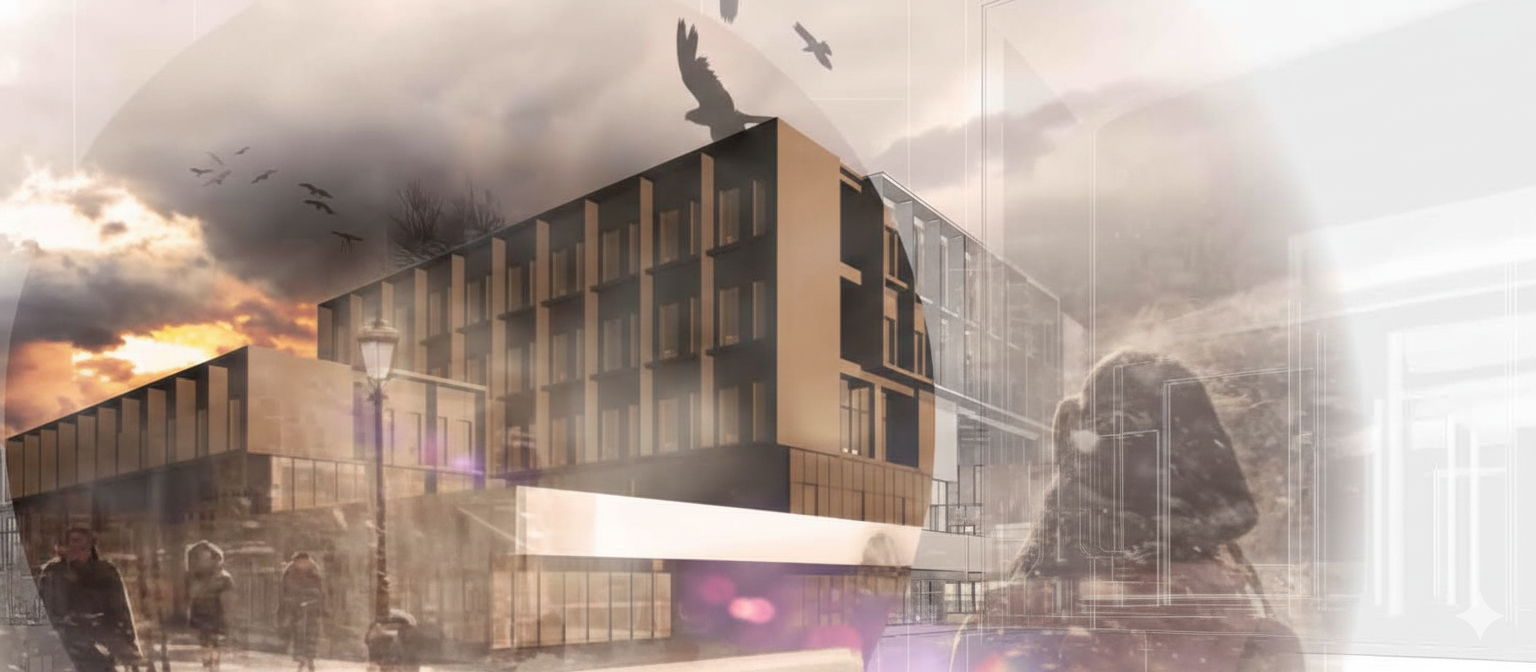
Dualität
Hybrid housing on reused urban infrastructure
Location: Berlin Wilmersdorf
Project type: Architectural proposal
Construction: Timber modular on existing structure
Program: Student & refugee housing
Description
Dualität proposes a hybrid residential building for students and refugees on top of an existing two-storey parking structure near the Universität der Künste in Berlin Wilmersdorf. The project reuses the existing structure as a structural, spatial, and social base, minimizing demolition while activating underused urban infrastructure. A lightweight modular timber system enables prefabrication, low structural loads, and adaptability over time. Shared and collective functions occupy the lower levels, forming an urban plinth, while private living spaces are located above. Refugees and students are mixed on all residential levels, producing integration through spatial organization rather than social labeling.
Full structural and spatial reuse of an over-dimensioned parking structure as the base for new housing, avoiding demolition and enabling central densification.
Organization of public, shared, and private spaces along a vertical gradient, allowing the building to function as an urban interface rather than a closed residential block.
Mixed residency across all floors, with shared facilities and circulation designed to prevent segregation and support everyday coexistence.
Development of a modular residential unit suitable for mid-term inhabitation, combining standardization with adaptability and dignity.
Design of the project as a site-specific intervention that also functions as a replicable strategy for similar infrastructural sites.
Adaptive reuse Modular timber construction Housing typologies Social integration through space Sustainable urban densification Site-specific + transferable strategies
Creating socially integrative housing by building on existing urban infrastructure. Reusing an underutilized parking structure to enable sustainable housing, social mixing, and long-term adaptability within the existing city.
More projects coming soon